Farming News Roundup: Visa Delays Are Threatening Harvest Labour, and a Dry Summer Follows a Wet Winter
This fortnight's news roundup covers two stories that don't get enough attention outside the farming press but matter directly to any Victorian operation with staff and paddocks to manage: a labour supply squeeze heading into harvest, and a season that's swinging from too wet to potentially too dry. Neither is the kind of thing that shows up in a government press release, which is exactly why it's worth reading the farming media directly rather than waiting for an official announcement.
Visa Processing Delays Put Harvest Workforce at Risk
According to Stock & Land, reporting on 6 September 2026, Victorian crop growers are struggling to secure seasonal backpacker workers because working holiday visa processing has slowed down — currently taking 30 or more days. With some large farms needing up to six backpacker workers during harvest and workers potentially needed as soon as November, growers are worried the timing won't line up.
Victorian Farmers Federation President Ryan Milgate put it bluntly: "If a crop is ready to harvest and the cattle are needing to be milked and the workers are not there, it will be a potential disaster." VFF Grains Group President Jason Mellings raised a safety angle too, warning that understaffing "becomes an occupational health and safety issue or a fatigue issue" — meaning the remaining crew end up working longer, more tired hours to cover the gap. Warracknabeal grower James Gregson was more blunt still about the pressure it's putting growers under.
If harvest labour is part of your plan for the coming season, this is worth acting on early rather than assuming it'll sort itself out. Lodging any visa sponsorship paperwork or backpacker bookings well ahead of your usual timeline, staying in touch with your regional Harvest Trail or labour hire provider about likely availability, and building a bit of slack into your harvest roster are all sensible ways to get ahead of a squeeze that, on this reporting, looks like it's going to bite some growers this season.
It's also a timely reminder to have your employment paperwork in order well before workers arrive, not after. Piece rate agreements, minimum award pay rates, and accommodation arrangements for visiting workers all attract scrutiny from the Fair Work Ombudsman during harvest season, and a labour shortage tends to tempt otherwise careful employers into cutting corners on onboarding just to get bodies into the paddock faster. A rushed start is exactly when a compliance mistake is most likely to slip through, so it's worth having your contracts and induction process ready to go now, while there's still time to get it right rather than scrambling once workers are already on site.
After a Wet Winter, a Dry Summer Is Forecast — Here's What That Means for Paddocks
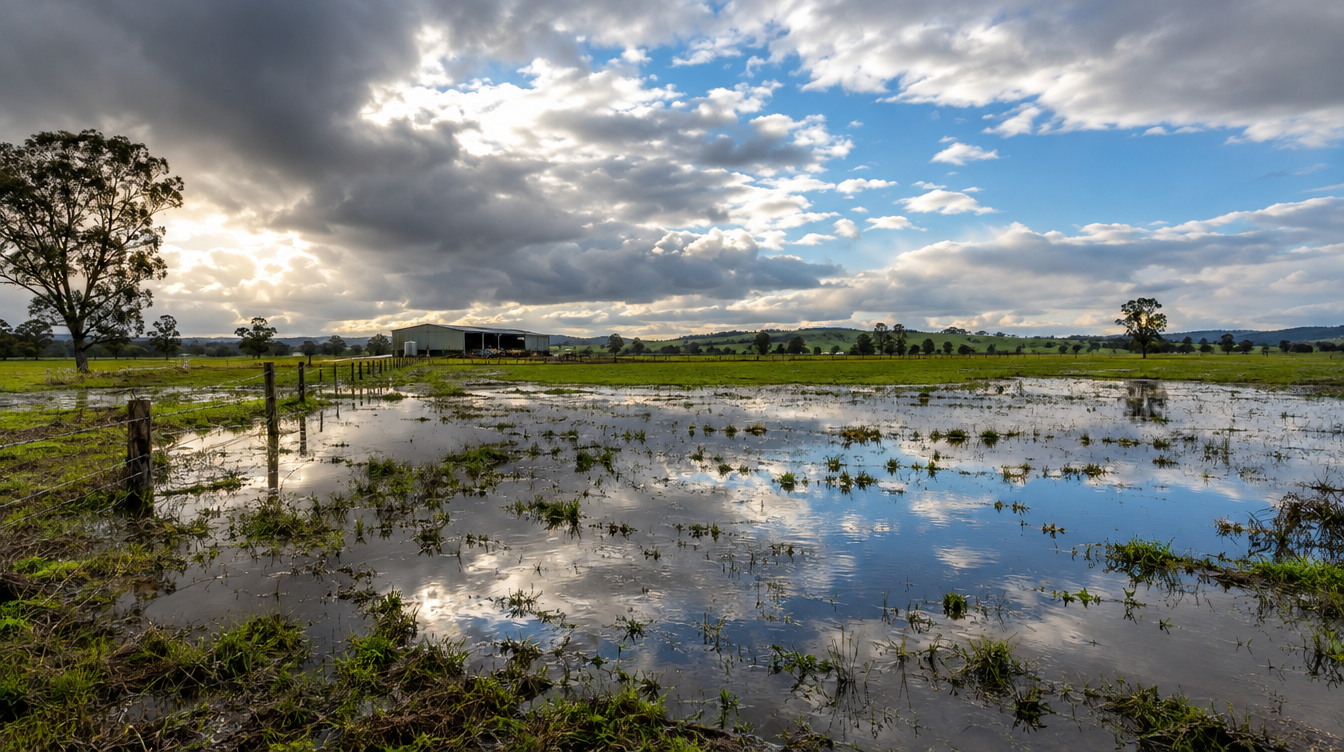
According to ABC News, reporting on 16 August 2026, parts of Victoria received up to 150mm of rain in a short period, with some areas experiencing flooding. Farmer Russell Hocking, who farms at Prairie in the Mallee, described his property as "extremely wet" despite the wider region looking excellent. Growers in western Victoria reported losing up to 15% of crops to the flooding, with the potential for a further 10% loss if paddocks don't dry out quickly.
The wet conditions have brought a knock-on problem: increased disease pressure and a shortage of fungicide, forcing some growers toward expensive aerial spraying. Farm consultant Simon Craig was quoted comparing the cost of a contractor boom spray (roughly $8–$10 per hectare) against aerial spraying by plane (roughly $24–$26 per hectare) — a meaningful cost difference when paddocks are too wet to drive a ground rig through them. Dairy farmer Craig Dwyer summed up the frustration simply: "It's just too wet to traffic paddocks at the moment."
The twist is what's forecast next: an El Niño pattern for spring and summer that's expected to be one of the strongest on record, pointing to a dry summer following directly on from this wet stretch. That's a genuinely tricky combination to plan around — waterlogged paddocks and disease pressure right now, with the prospect of dry, potentially tough conditions arriving in just a few months. It's worth using any drier windows in the coming weeks to get on top of drainage and disease management while you can, and turning your mind early to water storage, stock feed budgets and irrigation readiness for the summer this forecast is pointing towards.
This kind of whiplash — flooding one season, drought warnings the next — is becoming a familiar pattern rather than a one-off, and it's worth checking the Bureau of Meteorology's long-range forecast updates yourself over the coming weeks rather than relying solely on this article, since seasonal outlooks get revised as spring develops. If you haven't already, it's also a good time to review your farm's water storage capacity and any drought support options (including the Farm Drought Support Grants covered in an earlier batch of these posts) while there's still some breathing room before summer conditions potentially bite.
References
● Stock & Land — "Victorian crop harvest could be slowed down by visa delays" —
https://www.stockandland.com.au/story/9343058/victorian-crop-harvest-could-be-slowed-down-by-visa-delays/
● ABC News — "Farmers in regional Victoria welcome rain ahead of expected dry summer" —
https://www.abc.net.au/news/2026-08-16/victorian-farmers-welcome-rain-ahead-of-forecast-dry-summer/107039328
Want more like this? See all our available blog posts at MyFarmHQ.com.au.