
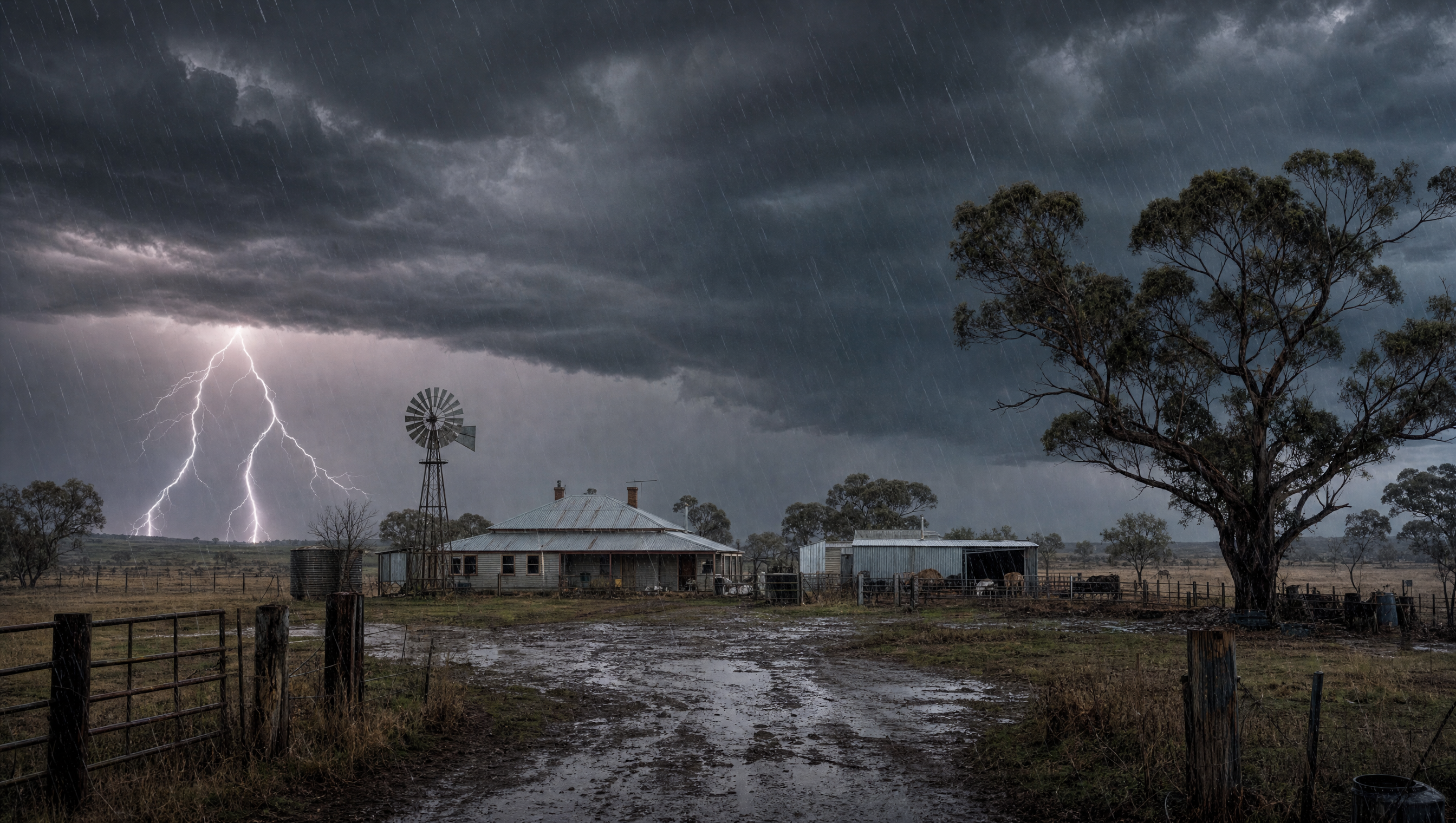
Insurance & Risk Watch: Why Premiums Keep Climbing, and How to Storm-Proof Your Cover Before Summer
Two insurance stories worth reading together as we head toward what's shaping up as a hot, dry spring and summer — why premiums keep going up, and exactly which season is costing insurers (and farmers) the most.
Why Farm Insurance Premiums Keep Climbing
According to insurance broker Barrack Broking, writing in May 2026, climate volatility has shifted from being an occasional disruption to a constant operational pressure for Australian farms. Floods, prolonged droughts and severe storms are now occurring more often and with greater intensity, disrupting planting, harvesting and recovery cycles in ways many operations haven't had to deal with before.
Premiums are climbing for a few reasons at once: replacement costs for machinery, irrigation systems and buildings have risen substantially, while insurers are simultaneously reassessing their exposure to higher-risk regions and tightening underwriting as climate-related claims increase.
Barrack Broking flags four things worth reviewing before your next renewal: your asset values (a lot of policies haven't been updated to match current replacement costs, leaving a real underinsurance gap); your business interruption cover (standard indemnity periods often don't match how long farm recovery actually takes — six to twelve months or more for crop replanting or livestock rebuilding); your risk visibility (understanding your actual exposure to weather-specific risks); and general policy alignment, checked more often than just at renewal time.
An underinsurance gap is one of the easiest things to miss, because it doesn't show up as a problem until you actually need to claim — if a shed, header or irrigation system would cost noticeably more to replace today than what your policy lists it as worth, that gap comes straight out of your own pocket at the worst possible time. A proper valuation every couple of years, rather than just accepting an automatic indexation on renewal, is a cheap way to avoid that surprise.
Summer Storms Are the Biggest Claims Driver — Here's How to Prepare Now
Backing that up with hard numbers, Elders Insurance released claims data in May 2026 showing summer is consistently the costliest season for farm insurance claims nationally. In 2023–24, summer accounted for 47% of all annual claims; in 2024–25, it was already sitting at 41% partway through the season. Total claims paid nearly doubled year-on-year, from $55.85 million in 2023 to $92.14 million in 2024, with an average summer claim cost of around $24,000. NSW and Queensland together accounted for 65% of 2024–25 summer claims.
Elders Insurance General Manager Dale Gleeson put it simply: "Storm activity typically peaks over summer, and those events can be incredibly costly and disruptive for farmers." The recommended preparation is practical rather than complicated: inspect and maintain roofs before storm season, secure loose items that could become wind-borne hazards, review and update your insurance coverage while there's still time, and put together a business continuity plan for if the worst does happen.
Given the driest, warmest spring outlook covered elsewhere in this batch, pairing that weather risk with a proper look at your insurance now — rather than waiting for a renewal notice — is a sensible way to head into summer with both your property and your paperwork in better shape.
It's also worth having a conversation with a broker who specialises in agricultural risk rather than a general business policy provider, since the recovery timelines and seasonal exposure specific to farming rarely fit neatly into a standard commercial template. A ten-minute call now, before storm season builds, is a lot less stressful than trying to work through a claim and an underinsured shed at the same time.
One practical habit worth adopting regardless of who you're insured with: take dated photos of your major sheds, machinery and irrigation infrastructure once a year, and keep receipts for any upgrades or repairs. It costs nothing and takes an afternoon, but it's exactly the kind of evidence that speeds up a claim significantly if you ever need to make one after a storm.
References
● Barrack Broking — "Farm Insurance in Australia: What Farmers Should Review in 2026" —
https://www.barrack.com.au/farm-insurance-risks-australia/
● Farm Insurance Australia (Elders Insurance) — "Elders Insurance Urges Farmers to Prepare for Summer Storms Amid Rising Claims" —
https://farm-insurance.com.au/news.php?id=6937
Want more like this? See all our available blog posts at MyFarmHQ.com.au.